


I thought this was the patented question meant for homemakers. Very misplaced and ignorant, but a popular one nevertheless. My mother has been one, and I always felt sad for her, hence decided, whatever happens, I cannot be a homemaker. Not because it’s easy, lazy, or comfortable, but because it’s the hardest thing to do with loads of responsibilities and accountability and no respect.

So, that goes without saying that this is the most dreaded question to me. Even at work, I have never been asked this, but yet this happened to me.
A few weeks ago when my father made a call to my father-in-law, my father-in-law complained: what kind of daughter is she not to visit her parents for years? To which my father proudly replied: she is busy building a career, managing a home, and chasing her dreams to travel around the world. And then came the most unexpected reply: Where is she busy? She does nothing. Just locks herself in a room with a laptop while her kid cries for her. The domestic worker does all the work.
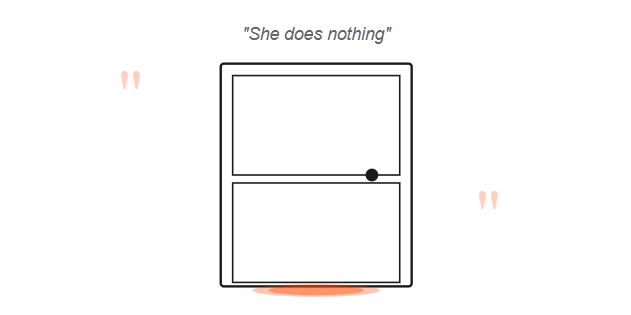
This came as a shock. When I was on a career break because of ill health, I was called a parasite for siphoning off my husband’s hard-earned money. And to a younger me, the criticism was acceptable. But to this middle-aged woman who wakes up before 6 every single day, weekdays or not, this stung hard.
And here’s why. My routine goes like this: I wake up, get my kid ready for school and drop her to the bus stop. I get ready and leave for office by 7:30. While I travel, I order groceries, pay bills and make any appointments necessary for the family. Then I call my parents and that’s the only time I actually spend talking to them. My office runs till 6 and then I am again traveling back home. That’s the only pocket of peace I have. I reach home and then I play with my kid or get any urgent home chores done. Then I sleep by 11 pm.
On weekends, my schedule mostly covers cooking, cleaning or decorating home, gardening, getting any repairs, solving specific problems for the family like insurance, documentation, trip planning, party planning, filing taxes, shopping online, entertaining guests—basically every maintenance activity you can think of, for my husband and his family. I have a handful of friends whom I meet once or twice a year.
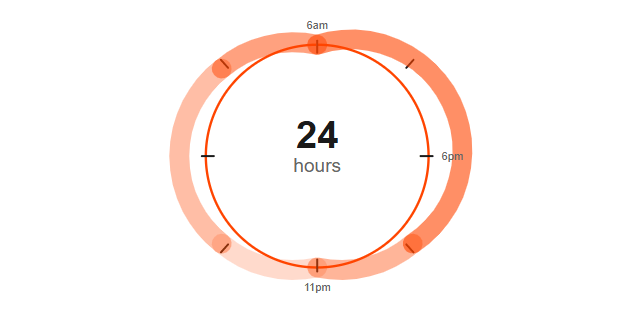
Yet comes the question. Why? Because I don’t do everyday cooking and cleaning and childcare? Probably yes, because like every human being, I too have 24 hours and unfortunately, like Hermione Granger from the Harry Potter series, I do not have a Time Turner device to help me be at two places at once.
And what’s funnier is that my husband spends the same time working, sleeping, watching cricket matches, catching up with friends, binge-watching, like every average bachelor. But he gets no question because he lives with his parents.
And hence I have realized one thing: the issue is not about being a homemaker or a working woman. The question is not about being able to make a choice. The core of the matter is whether your family respects your choice, your time and your profession. In my case, clearly it’s not there and I realize it to be the same situation for many of us.

The data backs this up. In India, women spend eight times more hours on unpaid care work than men —a disparity that’s among the highest in the world. According to India’s Time Use Survey, only 18.4% of Indian women engage in paid work on a given day, while 81.2% carry out domestic work. For men, 57.3% are employed while only around a quarter do housework. But here’s what stings: women in paid employment take on approximately six times more unpaid care work than employed men—clear evidence of the double burden . Women aged 25-44 spend around 6 hours on domestic chores daily, while men in the same age group spend just 28.4 minutes. And this invisible labor? It’s valued at 3.1% of India’s GDP, yet it remains unrecognized and uncompensated. The question isn’t whether we’re doing enough—it’s why what we do is never considered “enough. (Research Credit: Claude)
Unfortunately, our path to fight for respect and acknowledgement is marred with self-doubt, gaslighting and people-pleasing. And the worst part? We’re often set up to fight each other instead of the system itself.

A few days ago, a doctor shared on Instagram about the effects of epidural in the long term, the pain it causes, etc. In the comment section, the women turned it into a vaginal delivery vs C-section delivery—not in medical terms but about who suffers more. And that’s what made me realize: this is the modus operandi of patriarchy perhaps. Encourage them to suffer and give them medals based on whose suffering is perceived to be the highest. Isolate them so that only your validations seem valid to them. And these are not tools they have to learn, it’s in the air we breathe.
The worst part is even though I know it, I am unable to break it and it’s making me more miserable. I am alone with no one to share. It’s always a lonely journey because you talk to someone and you are washing your dirty linen in public. You keep it to yourself, you suffer from bottling it up and turn into a nagging wife and bickering daughter-in-law. It’s a never-ending cycle.

Or at least, that’s what they want us to believe. Because the moment we start sharing these stories, the moment we realize we’re not alone in this cycle, something shifts. The isolation breaks. And that’s exactly what I’m trying to do now.
PS: These moments of quiet rage, of invisible exhaustion being dismissed as “nothing,” are what’s driving me to write Musings of Accidental Feminists. This book will be a collection of stories from women like me, women who never set out to be feminists but were pushed into consciousness by the relentless grind of gendered expectations. We thought we had made different choices than our mothers, only to find ourselves fighting different battles in the same war. If you have a story of becoming an “accidental feminist,” moments where you were forced to see the invisible chains, the double standards, the impossible expectations, I want to hear from you. Share your story with me at arpitanayak2002@gmail.com. All stories will be anonymized and fictionalized, but your truth will be honored. Let’s build this together.
PPS: For context: my in-laws do help with childcare during work hours, and I value that. But they’re compensating for their son, not replacing me. I still do my share of parenting plus everything else. He does neither. Yet I’m the one questioned.

 The BIOSCOPED Life